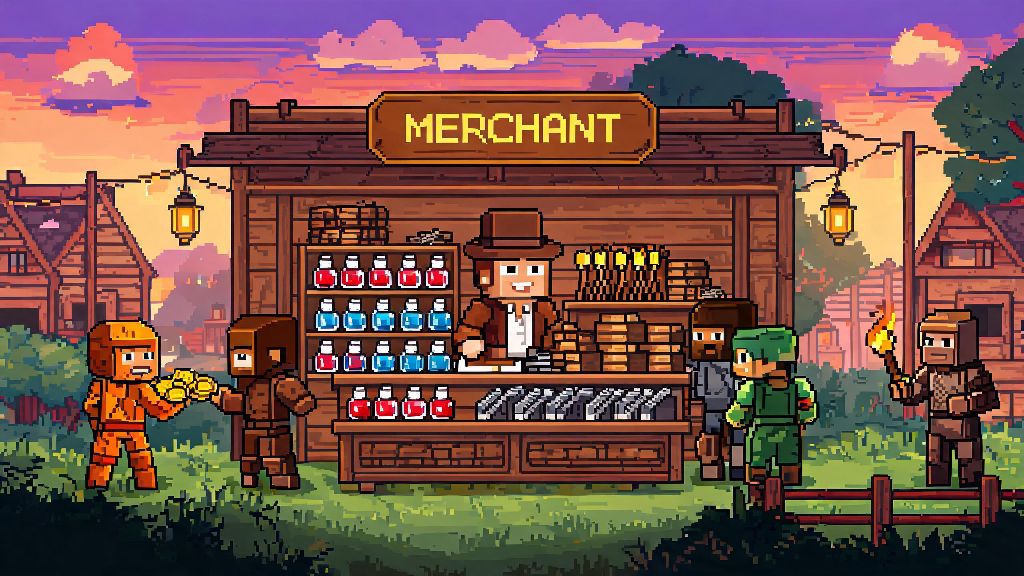
If you’ve just started your first Terraria playthrough, you’ve probably already noticed how quickly you burn through basic supplies like torches, healing potions, and building blocks. Running back and forth to mine more gel or gather mushrooms to craft potions gets old fast, and that’s where the Merchant comes in. Figuring out how to get the merchant in Terraria is one of the first big quality-of-life wins for new players, and it’s way simpler than many early-game boss fights or crafting recipes. I remember my first playthrough, I spent three hours wandering the surface looking for him before I realized I was missing one tiny spawn requirement, so I put this guide together to help you avoid that same mistake.
What You Need to Know to Get the Merchant in Terraria
Unlike many late-game NPCs that require you to beat bosses or find rare items, the Merchant has surprisingly simple spawn requirements. I’ve tested these across dozens of playthroughs, both vanilla and modded, and the rules stay consistent almost every time. The only three non-negotiable requirements are:
50 silver is the only non-housing requirement you need to hit first, and you can even hit it accidentally if you’re looting slimes and chests during your first hour of play. The biggest hangup for most new players is the valid house, so don’t skip over those rules. A valid house needs to be at least 6 blocks wide and 3 blocks tall, with a background wall, a door, a light source, a table, and a chair. Remember that naturally generated background walls, like the dirt walls you find in caves, don’t count—you have to place the walls yourself for the house to register as valid. I made this exact mistake on my first playthrough, so I promise it’s a super common error.
Fastest Ways to Hit the 50 Silver Threshold Early Game
If you’re in a hurry to get the Merchant set up, you don’t have to grind for hours to hit that 50 silver mark. There are a handful of low-effort ways to rack up coins fast without fighting tough enemies or exploring dangerous biomes. Slime rains are one of the best early-game events for quick coins, even if you only have a basic copper sword. Purple and gold slimes spawn more frequently during these events, and they drop way more coins than regular green slimes. You can easily hit 50 silver in 10 minutes if a slime rain starts right after you spawn into your world.
If you don’t get a slime rain, looting surface chests is another great option. Most surface chests have between 10 and 20 silver inside, plus extra items you can sell for even more. Extra gel from slimes is another great low-effort item to sell early on, since you only need one or two stacks for torches, and any extra can be flipped for quick change. If you’ve been mining a lot of copper or tin ore, you can also sell the extra bars you don’t need for gear, as they sell for a decent amount per stack. You don’t have to hoard every item you find early on—selling the excess will get you the Merchant much faster.
Common Mistakes That Stop the Merchant From Spawning
Even if you think you’ve met all the requirements and are trying to figure out why you can’t get the merchant in Terraria even after checking all the boxes, it’s not uncommon for him to take longer than expected to show up. Most of the time, it’s a tiny, easy-to-fix mistake that’s holding him back. The most common issue I see is players building their first base too close to a corruption or crimson biome. The game will not let NPCs move into houses within 25 blocks of corrupted or crimson blocks, so if your house is right next to a purple or red biome, you’ll either need to clear the nearby corrupted blocks or build a new house a little further away.
Another common myth is that you have to keep 50 silver in your inventory at all times for the Merchant to spawn. That’s not true at all—once you hit 50 silver once, the game registers that you meet the requirement, even if you spend all of it on crafting materials or other items right after. If you have an active event like a blood moon or goblin invasion, NPC spawn checks are completely paused until the event ends, so you’ll just have to wait it out. I once waited three hours for the Merchant to spawn during a blood moon, and I felt so silly when I realized the event was blocking him the whole time.
What to Do Once the Merchant Moves Into Your Base
Once the Merchant moves in, you’ll immediately notice how much smoother your playthrough gets. He sells all the basic supplies you’ve been grinding to craft, so you can spend less time gathering gel for torches and more time exploring underground biomes or building out your base. His starting inventory includes torches, lesser healing potions, wood, stone, and basic building tools, all for very low prices. The piggy bank is one of the best items you can buy from the Merchant early on, as it gives you 40 extra storage slots that you can access from any piggy bank in your world. That means you don’t have to run back to your main chests every time your inventory fills up during a mining trip.
As you progress, the Merchant will unlock more items to sell. Once you have 1 gold in your inventory, he’ll start selling iron anvils, which saves you from having to craft one yourself if you’re short on iron ore. If you keep him happy by placing his house next to the Guide or Nurse, he’ll also sell a surface pylon, which lets you fast travel back to your base from any other pylon in your world. Even late in the game, I still stop by the Merchant regularly to restock on torches and healing potions when I don’t feel like crafting a hundred of them myself. He’s far from the most exciting NPC in the game, but he’s easily one of the most useful for players of all skill levels.
At the end of the day, getting the Merchant set up in your base is one of the easiest and most rewarding early-game tasks you can complete in Terraria. You don’t need fancy gear or to beat any tough bosses, just a valid house and a little bit of loose change. Now that you know how to get the merchant in Terraria, you can skip the hours of grinding for basic supplies and focus on exploring, building, and taking on the game’s more challenging content. Don’t forget to check his inventory every time you stop by, as he often restocks with new useful items as you progress further into your playthrough.