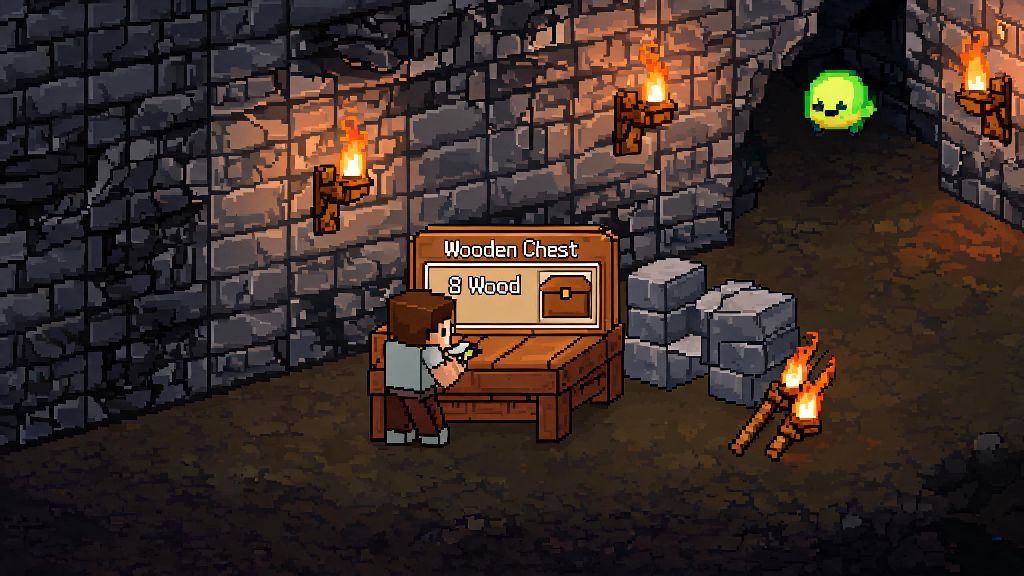
If you’ve ever found yourself dumping rare loot on the ground mid-cave run because your inventory is full of stone blocks and spare torches, you already know why learning how to make chest terraria is one of the first essential skills every new player needs to master. Chests don’t just keep your items safe from despawning when you die; they also let you organize your base so you don’t spend 10 minutes rummaging through piles of random gear when you need a specific potion for a boss fight. I’ve been playing Terraria for over 8 years, and I still build at least 4 new chests every time I start a new playthrough, even when I unlock late-game storage options later on. The basic wooden chest is the foundation of all long-term base organization, and it’s way easier to craft than a lot of new players assume.
How to Make Chest Terraria: Exact Crafting Steps
The best part about crafting a basic chest is that you don’t need any advanced tools or rare drops to make one, even on your first day of a new playthrough. You don’t need any rare materials or advanced crafting stations to make a basic chest, which is why you can build one within the first 10 minutes of spawning if you prioritize chopping wood early. All you need is 8 pieces of any wood type, and a workbench to craft it at.
First, chop down 2-3 regular trees near your spawn point to collect at least 18 pieces of wood total. 10 of those will go towards making your first workbench, and the remaining 8 will go towards your first chest. Once you have the wood, open your crafting menu to make the workbench, then place it down on any flat surface in your temporary shelter. Stand next to the workbench, open your crafting menu again, and scroll to the “storage” tab to find the chest recipe. Click to craft it, then place it anywhere in your base to start using it right away.
If you use different wood types like palm, boreal, or mahogany, you’ll get a themed chest that matches the wood’s appearance, but all basic chests have the exact same 40 storage slots. Don’t waste time hunting for a specific wood type unless you’re building a themed base and care about matching decor. For Journey mode players, you only need to research one basic chest to unlock unlimited free duplicates, which saves a ton of time when you’re building a large storage room later.
Pro Tips for Farming Chest Materials Fast
Even though wood is one of the most common resources in the game, farming it can feel tedious if you need to make 10+ chests for a full storage setup. I used to waste 20 minutes chopping random trees every time I needed more storage, until I figured out a few simple hacks to cut that time down by 75%. Always carry a copper axe or better when you’re exploring surface biomes—you can chop down full trees in 2-3 hits, and you’ll collect enough wood for 5 chests in less than 5 minutes without going out of your way.
If you’re exploring the jungle biome, prioritize chopping down large mahogany trees. They drop 2-3 times more wood per tree than regular surface trees, so you can get enough wood for 10 chests in just a few minutes. You can also mine naturally generated chests from underground cabins, dungeons, and shrines if you don’t feel like crafting them, but you’ll need a pickaxe with at least 35% pickaxe power to mine them without breaking them.
Chest Organization Hacks to Avoid Inventory Chaos
Crafting chests is only half the battle; if you just dump all your random loot into unlabeled chests, you’ll still waste hours looking for specific items when you need them. I learned this the hard way during my first expert mode playthrough, when I spent 15 minutes rummaging through 12 unlabeled chests looking for shadow scales right before a planned Eater of Worlds fight, and missed the spawn window entirely. Label your chests as soon as you place them—you can use a sign right next to each chest, or use the built-in rename feature added in the 1.4 update to label the chest directly from its menu.
Start with broad categories first to keep things simple: one chest for ores and bars, one for building materials, one for potions and consumables, one for boss drops and rare gear, and one for spare tools and accessories. Group similar chests next to the relevant crafting stations to cut down on walking time: put your ore and bar chests right next to your anvil and furnace, put your potion chests right next to your bottle station, and put your building material chests near your main base entrance for easy access when you’re expanding.
If you play on public multiplayer servers, always add a lock to any chest that holds rare or valuable items. All you need is a lock item crafted from 1 iron bar at a workbench, and you can attach it to any chest to prevent other players from opening it. Keep 1 empty chest near your base entrance for when you come back from a long mining or exploration run: you can dump all your random loot there first, then sort it into your labeled chests later instead of standing around for 10 minutes right when you get home.
Upgraded Chest Options for Late-Game Play
Basic wooden chests work perfectly fine even in endgame, but there are a few upgraded storage options that make managing hundreds of items way easier once you reach hardmode. Iron and gold chests are the first basic upgrade: they have the same 40 storage slots as wooden chests, but they have a more polished look that fits well with industrial or late-game base themes. You can craft them with 8 iron or gold bars at a workbench, or find them naturally in underground biomes.
If you hate running back to base to drop off loot during long exploration runs, the void vault is a total game changer. The void vault is the best late-game storage upgrade for players who love exploring—it stores 40 items, and you can access it from anywhere on the map, even if you’re in the middle of the underworld fighting the Wall of Flesh. You can craft it with 30 demonite or crimtane bars, 15 shadow scales or tissue samples, and 10 obsidian at a demon altar. It’s a bit pricey to make early on, but it’s worth every resource once you start exploring distant biomes like the jungle temple or the floating islands.
You can also find or craft themed chests for almost every biome in the game, from skyware chests on floating islands to ice chests in the snow biome to honey chests in the jungle. All of these have the same storage capacity as basic wooden chests, so they’re only worth chasing if you want to match your storage to your base’s aesthetic. If you need even more storage space, dressers are a great alternative: they hold 80 items each, so you can cut the number of storage units you need in half for large item collections.
At the end of the day, even with all the fancy late-game storage options, learning how to make chest terraria is the simplest and most effective way to keep your base organized and your loot safe. You don’t need any special skills or rare materials to make one, and it will save you hours of frustration down the line when you don’t have to dig through piles of random items to find what you need. I still build at least 2 basic wooden chests every time I start a new playthrough, even if I plan to upgrade later, because they’re just that useful. Next time you’re staring at a full inventory mid-mining run, don’t dump that rare loot on the ground—head back to base, craft a chest, and store it properly.