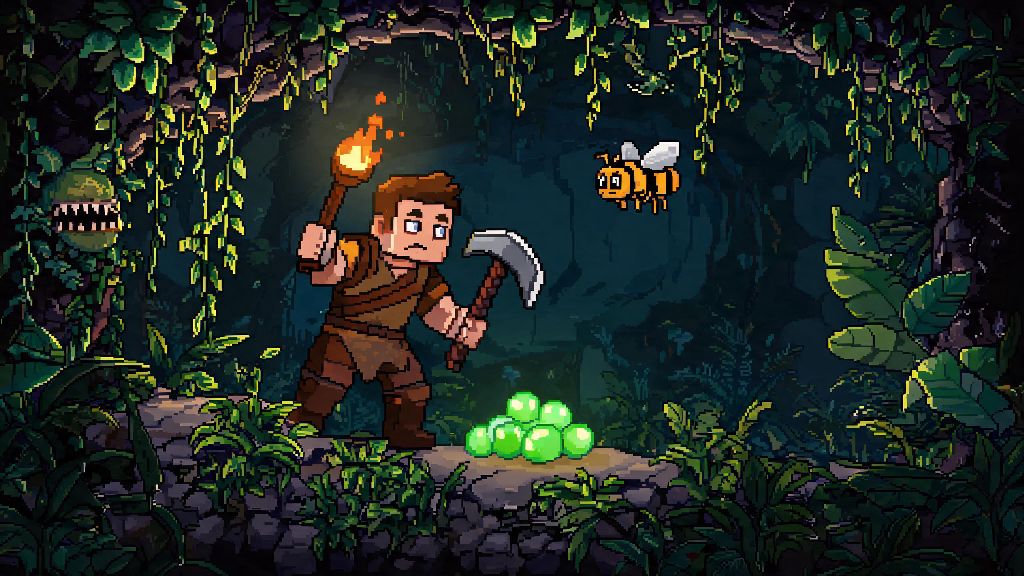
If you’ve ever spent hours wandering the dark, winding tunnels of the Terraria jungle in 2026 chasing that faint, flickering green glow to craft Jungle Armor or the Ivy Whip, you know how frustrating it can be to hunt for jungle spores without a clear plan. I’ve logged over 420 hours in Terraria’s 1.4.5 final update this year, and I’ve tested every spore farming trick in the book to cut down on grind and avoid getting swarmed by Hornets or poisoned by Man Eaters mid-collection. This guide breaks down exactly where to find spores, how to farm them safely, and common mistakes to skip so you can stock up in half the time.
Core Spawn Requirements to Get Jungle Spores in Terraria
Before you head into the jungle, it’s critical to understand exactly what conditions make jungle spores spawn, so you don’t waste time looking in the wrong spots. First, spores only generate in the Underground Jungle biome, which means you have to be below 0 elevation to find them. Surface jungle areas will never spawn spores, no matter how long you wait around. Jungle spores only grow on naturally generated jungle grass, so if you place artificial jungle grass blocks in a different biome, they won’t work for spore farming.
Spores also need at least 2 blocks of open space above the grass they spawn on to generate, so dense, narrow cave systems will have much lower spawn rates than wide, open underground jungle areas. They emit a bright green glow that cuts through darkness, so you won’t need to light every inch of your farm to spot them, though lighting does help reduce unwanted hostile mob spawns. In the 2026 game update, developers also adjusted spore spawn rates to be 20% higher if you have fewer than 10 spores in your inventory, so you don’t have to worry about early collection slowing down your farm runs.
2026's Fastest Method for Safe Jungle Spore Farming
This method is the one I use for every new playthrough, and it consistently nets me 30+ spores in 10 to 15 minutes with minimal risk of dying to jungle enemies. First, find a large, open section of the Underground Jungle that’s at least 3 blocks tall and 20 blocks wide, then clear out all existing enemies in the area first before you start building your farm. You’ll want to flatten out a straight strip of jungle grass along the bottom of the area, and remove any background walls that are blocking open air space, as walls reduce spawn rates significantly.
Before you start farming, grab these essential items to speed up the process and keep you safe:
Once your farm is set up, place a water candle and battle potion to double all spawn rates in the area, including spores. Walk back and forth along the length of your farm strip, catching spores with your bug net as they pop up, and take out any enemies that spawn before they can hit you. If you’re playing in hardmode, you can also place a few campfires and heart lanterns along the strip for passive health regeneration, so you don’t have to stop to drink potions as often.
Common Mistakes That Slow Down Your Jungle Spore Collection
Even if you follow the farm setup steps perfectly, small mistakes can kill your spawn rates and make your farm runs take twice as long. The most common mistake I see new players make is trying to farm spores above ground, or in caves that are just above the 0 elevation mark. You must be below 0 elevation to see any jungle spore spawns at all, so pull up your map and check your depth before you waste time setting up a farm in the wrong spot.
Another common mistake is letting your farm area get corrupted or crimsoned. Even one single block of corrupted jungle grass will stop spores from spawning in a 10-block radius around it, so keep a stack of purification powder on you when you head to the jungle, especially if you’re playing in a hardmode world where biome spread is active. I made this mistake last month when I was farming spores for Chlorophyte Shotbullets, and I got zero spawns for 15 minutes before I noticed a tiny 1-block corrupted patch hidden behind a wall near my farm.
You also don’t want to make your farm strip too small. If your farm is less than 15 blocks wide, spawn rates drop by 60% because there’s not enough grass blocks for spores to generate on. You can make your farm as long as you want, but 20 to 30 blocks is the sweet spot for fast spawns without having to walk too far back and forth between collection runs.
Creative Uses for Jungle Spores in 2026 Terraria Playthroughs
Most players only collect enough jungle spores to craft their early game armor and tools, but spores have a ton of useful applications for both combat and building that you might not know about. For early game mages, Jungle Armor is one of the best pre-hardmode armor sets you can get, offering 21 defense and 16% reduced mana cost that will carry you all the way to Skeletron and the Wall of Flesh. The Ivy Whip grappling hook, which also requires spores, lets you hook to 3 surfaces at once, making exploration of large cave systems far easier than the basic hook you get from skeletons.
You can also use spores to craft Jungle Potions, which increase your movement speed and mining speed by 25% when you’re in the jungle biome, making future resource runs for Chlorophyte or jungle roses far faster. For builders, you can use jungle spores to craft glowing green torches and furniture for jungle-themed builds that emit a soft, natural light without the harsh yellow tint of regular torches. If you play modded Terraria, most popular 2026 content packs add extra recipes for jungle spores, including new magic weapons, building blocks, and even pet summoning items, so it’s always a good idea to keep a stack of 50+ in your storage chests.
You don’t have to spend hours wandering dark, enemy-filled cave systems to get jungle spores in Terraria if you follow the simple prep and farming steps we covered. I use this exact method every time I start a new 2026 playthrough, and I usually have enough spores for all my early game crafting needs in under 15 minutes. If you test out this farm, feel free to tweak the size of your farming strip to match your world’s jungle layout, and don’t forget to bring that bug net to speed up collection even more.