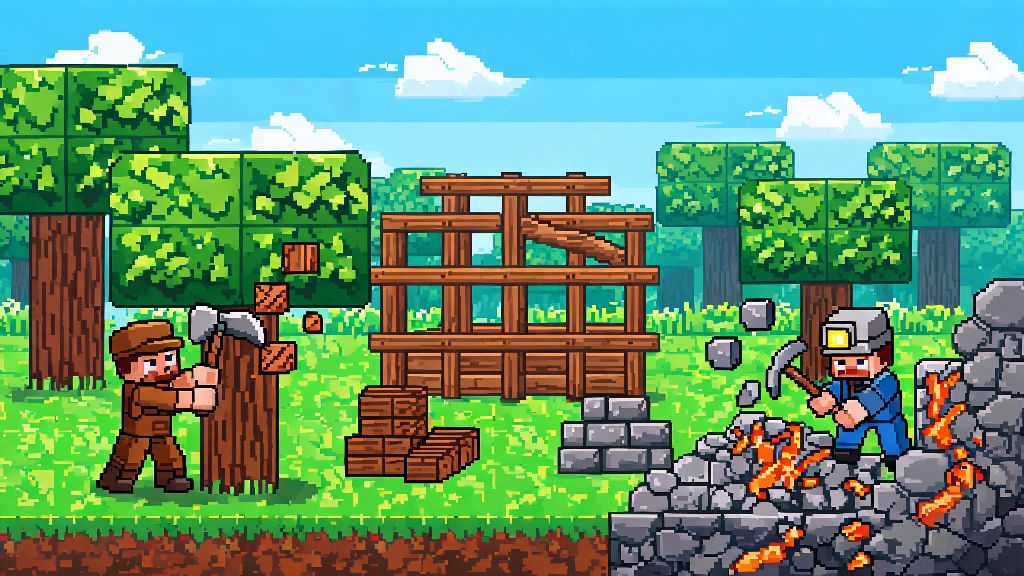
If you’re jumping into Terraria for the first time in 2026 or coming back after a few years away, the first core skill you’ll need to master is how to build a home in terraria. It’s not just a place to stash your loot or sleep through the night—your base is your safe space from wandering demons, the home for all the NPCs you unlock, and the central hub for every adventure you go on. I’ve put together this guide from 120+ hours of playtime this year, so you won’t make the same silly mistakes I did when I first started out, like building my first base right next to a hidden crimson biome spawn point. I still remember logging on the next day to find half my walls corrupted and my guide refusing to move back in.
Prep Your Materials Before You Break Ground
You don’t have to wait until you have rare hardmode materials to build a functional first home. Early game, you can get everything you need in your first 10 minutes of running around the surface chopping trees and mining stone. You don’t need fancy materials for your first base, and you can always upgrade it later as you unlock more resources and decorative blocks.
If you’re playing classic mode, wood is totally fine for your first build, but if you’re on expert or master mode, stick to stone or ebonstone for extra defense. Demon eyes and zombie hoards can break through wooden doors during blood moons, so sturdier materials will save you a lot of stress early on. Always gather 20% more materials than you think you need, because you’ll almost certainly mess up a few wall placements or decide to expand halfway through building.
For a basic starter home that fits 2 NPCs and all your early crafting stations, gather these supplies first:
If you spawn near a desert, cactus blocks are a fun alternative to wood that are slightly more fire-resistant, but they’re weaker than stone so they’re not ideal for master mode runs. You can also mix materials for a more unique look, just make sure all solid blocks are the same type if you want a uniform appearance.
Core Rules to Follow When You Learn How to Build a Home in Terraria
A lot of new players build a nice-looking box and then get confused when the guide refuses to move in. There are a few non-negotiable rules the game uses to decide if a house is valid for NPCs, and they changed slightly in the 2026 quality of life update to make housing more flexible. First, the main room has to be at least 6 blocks wide and 4 blocks tall, not counting the floor and ceiling. That gives enough space for the NPC to move around and for the required furniture.
No gaps in your background walls are allowed, even a single 1x1 gap will make the house unlivable for NPCs, and monsters can spawn inside the gap too. You can use any type of background wall you want, from plain wood to glowing crystal walls, as long as the entire back of the room is filled in. The 2026 update removed the rule that background walls have to match the solid block type, so you can mix and match as much as you want.
You also need to make sure the area around your base is not corrupted, crimsoned, or hallowed. NPCs won’t move in if the 25-block radius around the house is considered a hostile biome, and the 2026 patch increased the corruption spread range by 2 blocks, so you’ll want to stay at least 30 blocks away from any corrupted blocks to be safe. Each NPC needs their own separate room unless you’re building a shared house for two NPCs that get along, like the guide and the merchant, or the zoologist and the painter.
You don’t have to use solid blocks for the entire floor, either. You can replace half the floor with wooden platforms to make it easier to move between floors, as long as there are at least 3 solid blocks in each room for the NPC to stand on. Just make sure you don’t put platforms where the door goes, because the door won’t attach to a platform block.
Custom Design Hacks to Make Your Base Stand Out in 2026
Your starter home doesn’t have to be a boring plain box. The 2026 update added 15+ new decorative blocks, including weathered wood that changes color based on the time of day, glowing marble blocks, and custom rugs that you can dye any color. You can add as many decorative elements as you want without breaking NPC housing rules, so don’t be afraid to get creative.
If you build a second story, you can add a balcony with wooden railings so you can shoot at enemies from above without risking them getting inside. This is especially useful during blood moons or goblin invasions, when you’ll have dozens of enemies swarming the outside of your base. You can also add a minecart track directly outside your front door to make it easier to travel to distant biomes quickly, before you unlock wings or a flying mount.
You can use different background walls for each room to match the NPC that lives there, for example, use jungle walls for the zoologist’s room, dungeon walls for the tavernkeep, or snow walls for the clothier. Adding potted plants, paintings, and chandeliers will also make your base feel more lived-in, and some NPCs will even give you small gifts if you decorate their room to match their preferences.
If you’re playing with friends, you can build separate wings of the base for each player, with shared crafting and storage areas in the middle. Just make sure each player’s section has its own entrance, so you don’t accidentally let monsters into each other’s rooms when you come back from a mining trip. You can also add hidden storage rooms behind fake walls to store your most valuable loot, so other players on the server can’t steal it if you’re playing with random people.
Common Mistakes to Avoid With Your First Terraria Home
I’ve made every possible mistake when building Terraria bases over the years, so I can save you a lot of frustration by pointing out the most common ones new players make. First, don’t build too small. A 6x4 room works for a single NPC, but you’ll need space for 20+ NPCs as you progress through the game, plus crafting stations, storage chests, and teleportation pylons. Build at least 2 times bigger than you think you need at first, because expanding later is way more of a hassle than building extra space upfront.
Second, don’t use wooden doors if you’re playing on expert or master mode. Zombies can break through wooden doors during blood moons, and demon eyes can smash them too. Use iron doors with pressure plates, or a 2-block high gap that you can jump over, to keep enemies out. You can also add a wooden platform in front of the door to block zombies from reaching it, which is a cheap early game trick.
Third, don’t forget to light the area around your base. Even if the inside of your base is fully lit, if the 50-block radius around it is dark, monsters will spawn right outside and attack you when you leave to go mining. Place torches every 10 blocks around the perimeter of your base, and add lanterns on posts for extra light. You can also add traps outside the entrance to kill wandering monsters automatically, which is especially useful during invasion events.
Never build your base directly above a cavern entrance, unless you seal off the entrance first. Enemies will climb up from the cave and attack you while you’re crafting or organizing your loot, and you might even get a hardmode enemy spawning inside your base if you leave the cave open. If you do build near a cave, add a door or a block wall to seal off the entrance so you can still access it when you want to go mining.
Building a functional, safe base is the first step to every successful Terraria playthrough, and once you get the hang of how to build a home in terraria, you can get as creative as you want with your designs. Whether you’re building a tiny cottage for your first playthrough or a giant floating castle for your 2026 hardmode run, the core rules stay the same: keep it secure, make space for your NPCs, and stock up on extra materials before you start. Don’t be afraid to experiment with different designs—some of my favorite bases started out as messy experiments that I adjusted as I unlocked more materials and NPCs.