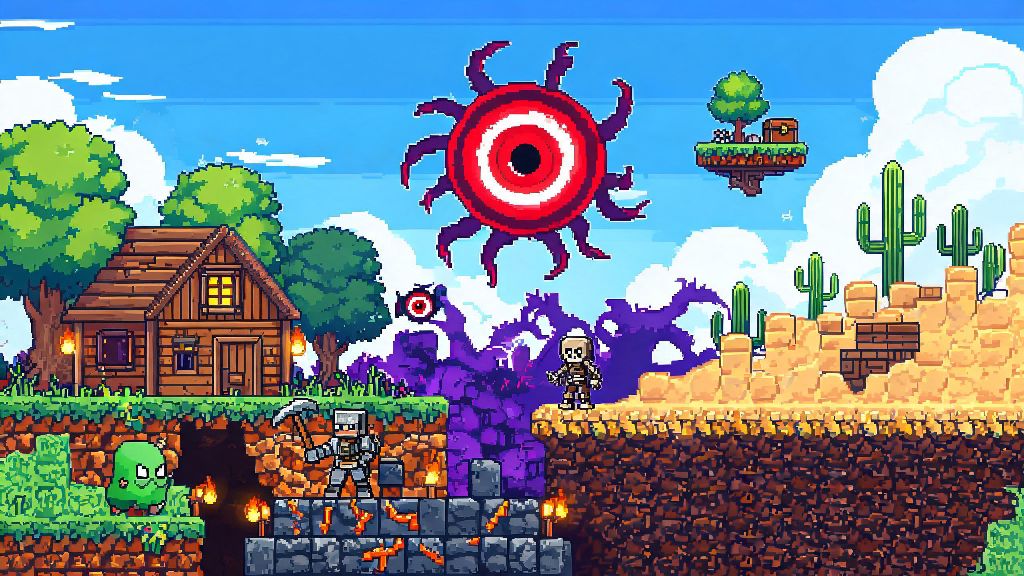
If you’ve ever lost hours digging for rare ores, fighting off Eye of Cthulhu bosses, or building elaborate floating bases, you’ve probably wondered at some point when was Terraria released. It feels like the cozy, action-packed sandbox has been around forever, but its journey from a small indie project to a global hit with over 44 million copies sold is way more interesting than you might think. I’ve been playing Terraria on and off since my high school days, and I still remember how different the early version was from the feature-packed game we know today. This guide breaks down its launch timeline, key updates, and little-known facts about its development that even long-time fans might miss.
When Was Terraria Released? The Official Launch Timeline
The official answer for PC players is May 16, 2011, when developer Re-Logic launched the first public version of the game on Steam. The project was led by Andrew “Redigit” Spinks, who built the core of the game in just six months with a tiny three-person team made up of a programmer, sprite artist, and himself. There was no big studio backing, no crowdfunding campaign, just a small group of people making a game they wanted to play themselves. The initial 2011 PC launch sold over 200,000 copies in its first week, which was a huge surprise for the team, who only expected to sell a few thousand copies at most.
While the answer to when was Terraria released is officially May 16, 2011 for PC, many players first experienced the game years later when it launched on their favorite console or mobile device. The first console port arrived for Xbox 360 in March 2012, followed by PlayStation 3 and PS Vita versions in 2013. The first mobile launch for iOS and Android also rolled out in 2013, though these early ports had limited features compared to the PC version for several years. Nintendo Switch players got their official port in 2017, with cross-platform play support added across most devices in updates after 2021.
What Changed Between Terraria’s Launch and Its Final Major Update?
Even if you know when was Terraria released, you might be shocked to learn just how little content was included in that initial 2011 build. The launch version only had 3 bosses, around 200 total items, and just one pre-hardmode difficulty level, with none of the endgame content or quality of life features players take for granted today. Unlike most studios that charge for extra content or DLC, Re-Logic promised from the start that all post-launch updates would be 100% free for all players. Over the next 9 years, the team released 9 major content updates that expanded the game to more than 10 times its original size.
The final major update, named Journey’s End, launched in May 2020 to celebrate the game’s 9th anniversary. It added hundreds of new items, new game modes, and quality of life fixes that fans had requested for years. Some of the most notable features added between launch and Journey’s End include:
Re-Logic released 9 major free content updates over 9 years, adding more than 10 times the original game’s content at no extra cost to players. The team has continued to release small bug fix patches and crossplay updates even after Journey’s End, so the game still gets minor improvements on a regular basis. This commitment to free support is one of the biggest reasons Terraria has maintained such a loyal fanbase more than a decade after launch.
Common Myths About Terraria’s Launch, Debunked
After being around for so long, a lot of misinformation about Terraria’s launch has spread across forums and social media. If you’ve ever debated the game’s origins with other fans, you’ve probably heard conflicting answers to when was Terraria released, especially from players who first played it on console years after the initial PC launch. Let’s break down three of the most common myths about the game’s early days.
The most persistent myth is that Terraria is just a 2D Minecraft clone. Terraria’s dev team intentionally designed the game to feel different from other sandbox titles, with a heavier focus on RPG progression and 2D action combat. Development on Terraria started before Minecraft became a global mainstream hit, and the core gameplay loop of fighting bosses, unlocking new gear, and exploring biomes has very little in common with Minecraft’s open-ended building focus. I have multiple friends who hate Minecraft’s slow, creative gameplay but have sunk hundreds of hours into Terraria’s combat and progression systems, so this myth never made sense to me.
Another common myth is that the game was abandoned shortly after launch. That couldn’t be further from the truth, as the team worked on consistent free updates for 9 years after the initial release. The third common myth is that the mobile version launched the same year as PC, but the first mobile port didn’t arrive until 2013, and it took another 4 years for the mobile version to get all the content available on PC.
Why Terraria’s Release Still Matters for Indie Games Today
Terraria’s launch was a turning point for the indie game industry, as it proved that a small team with no big studio backing could make a game that competed with AAA titles in both sales and long-term popularity. Terraria is one of the top 10 best-selling video games of all time, a milestone almost no other indie-developed title has ever hit. Its success paved the way for other 2D sandbox action games like Starbound and Core Keeper, which borrowed elements of Terraria’s progression loop while adding their own unique twists.
Re-Logic’s commitment to free post-launch content also set a new standard for indie game support. Before Terraria, most indie games only got a few small bug fix patches after launch, and any extra content was sold as paid DLC. Now, many players expect ongoing free updates for the games they buy, and Terraria showed that this model can be extremely profitable if you build a loyal, engaged fanbase. The team has also been very vocal against predatory monetization practices like loot boxes and pay-to-win mechanics, which has earned them a lot of respect from both players and other indie developers.
The game’s launch also sparked one of the most active modding communities in gaming, with thousands of fan-made mods that add new content, overhaul gameplay, and even turn Terraria into a completely different game. These mods have kept the game relevant for years between official updates, and many modders have gone on to work on their own successful indie games after getting their start making Terraria mods.
At the end of the day, whether you’re a new player just picking up the game for the first time or a veteran who’s beaten the Moon Lord 10 times, knowing when was Terraria released helps you appreciate just how far this tiny indie project has come over the last decade. It’s rare to find a game that gets consistent, free support for years after launch, and even rarer to find one that still has an active, friendly community more than 10 years after it first hits store shelves. If you haven’t played in a while, now’s a great time to jump back in – the latest crossplay updates make it easier than ever to play with friends, and there’s always a new build or challenge to try out. If you’re just starting out, don’t be afraid to take your time exploring before you jump into hardmode; there’s no rush to beat the game, and some of the best parts of Terraria are the little, unexpected moments you stumble on while digging or building.