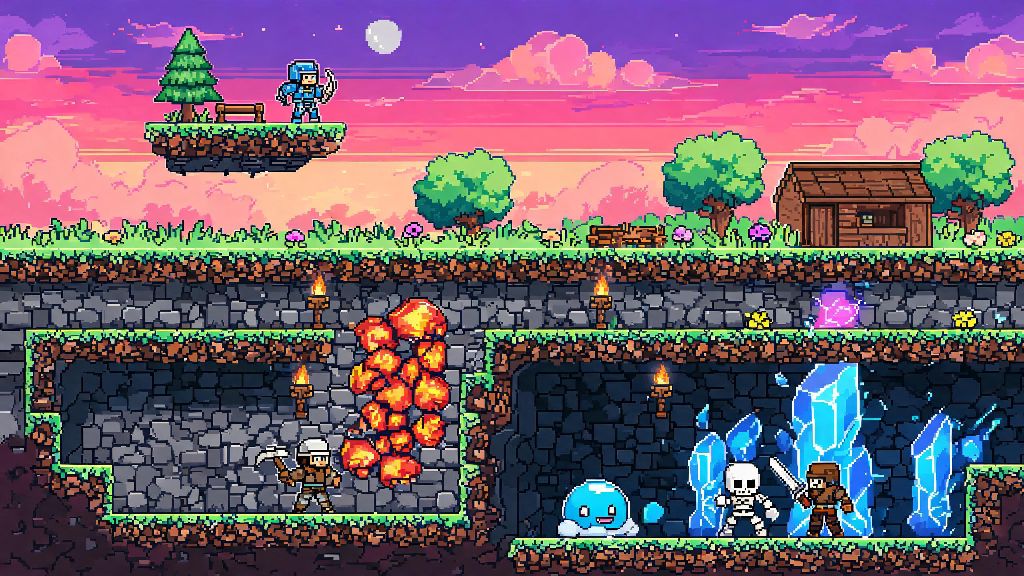
If you’ve spent dozens (or hundreds, no judgment) of hours digging through caverns for rare ores, fighting off Eye of Cthulhu on a first playthrough, or building a floating base that’s far fancier than it needs to be, you’ve probably wondered about the game’s roots at some point. I’ve been playing Terraria since it first popped up on indie game forums back in the early 2010s, and I’ve dug through tons of old dev interviews and forum posts to answer one of the most common fan questions: when was Terraria created. This guide breaks down its full origin story, little-known launch facts, and how it grew from a tiny side project to a global gaming staple.
When Was Terraria Created, Exactly? Full Launch Timeline
The official public release date for Terraria is May 16, 2011, when it launched exclusively for Windows PC. But the story starts almost a year earlier, in early 2010, when lead developer Andrew “Redigit” Spinks began working on the concept alongside a tiny team at his newly founded studio Re-Logic. He wanted to make a 2D sandbox game that blended the open creativity of building games with the fast-paced combat and progression of classic action RPGs, a gap he noticed wasn’t being filled by any major titles at the time.
The earliest pre-alpha builds of Terraria were built in less than six months, with the team working nights and weekends to get a playable version ready for public testing. Closed beta launched in late April 2011, with only a few hundred indie game fans getting access to test basic mechanics, loot tables, and the first three core bosses: Eye of Cthulhu, Eater of Worlds, and Skeletron. The beta was so well received that Re-Logic moved the full launch up by two weeks, to the mid-May date that’s still celebrated by fans every year as Terraria’s birthday.
It didn’t have a big marketing push behind it. Most early players found out about the game via posts on Reddit, Steam forums, and small indie game review sites. Even with no paid ads, the game sold far beyond the team’s wildest expectations in its first month, giving them the budget to keep working on extra content for years to come.
What Made Terraria Stand Out During Its Launch Period?
2011 was a huge year for sandbox games, with Minecraft already dominating the 3D building space and dozens of copycat titles popping up every month. But Terraria didn’t get lost in the noise, because it offered a totally different experience that catered to players who wanted more structure than open-ended building games provided. It didn’t try to compete with Minecraft directly; it carved out its own niche and built a loyal fanbase almost overnight.
Terraria sold over 200,000 copies in its first week of launch, a massive number for a small indie studio with no prior hit titles. There are three core reasons it resonated so much with players right out of the gate:
That promise of free updates is one of the biggest reasons the game still has a massive active player base over a decade later. Most other games of the era charged $10-$20 for major content drops, but Re-Logic stuck to its word even when fans offered to pay for extra content. All 9 major content updates released after launch have been 100% free for all players, no strings attached, even when some updates added more than 100 hours of new content and thousands of new items.
How Terraria’s Development Evolved After Its Initial Release?
In the first two years after launch, the team rolled out small content updates every 3-6 months, adding new biomes, bosses, weapons, and quality of life features based directly on fan feedback. For example, the Hallow biome and hardmode difficulty were added just six months after launch, doubling the total playtime for most players. They also started porting the game to other platforms, with Xbox 360 and PS3 versions launching in 2012, followed by mobile versions in 2013 and a Switch port in 2017.
There was a brief period in 2012 where Redigit stepped away from Terraria development to work on other projects, and many fans worried the game would stop getting updates. But he came back less than a year later, saying he missed working on the game and had a long list of fan requests he still wanted to implement. The team kept releasing major updates for almost 10 years after launch, with the final major update, Journey’s End, dropping in 2020 as a love letter to long-time fans.
Terraria has sold over 44 million copies across all platforms as of the latest public data, making it one of the best-selling indie games of all time. Even after Journey’s End, the team still releases small balance patches, bug fixes, and occasional holiday-themed content for free, so the game still feels fresh even for players who have been around since day one. Crossplay support added in 2021 also brought a whole new wave of players into the community, since friends could play together no matter what platform they owned the game on.
Fun Little-Known Facts About Terraria’s Early Development
After digging through years of old dev AMAs and forum posts, I’ve found tons of fun trivia about the game’s early days that most casual fans don’t know. For example, the original working title for the game was “Terrarium”, but the team shortened it to Terraria because it was easier to type, easier to remember, and sounded catchier when fans talked about it online. They tested the name with a small group of beta testers, and almost everyone preferred the shorter version, so they made the switch a month before launch.
The game’s iconic crafting system was also built in just two weeks, because the team wanted to make sure players could combine almost any item they found to make something new. They tested over 200 different crafting recipe combinations during beta, and adjusted the required materials based on tester feedback to make early game progression feel rewarding but not too grindy. The first version of the game only had 250 craftable items, while the current version has over 4,000.
The entire initial development team for Terraria was just 4 people: Redigit as lead designer and programmer, a second programmer to help with bug fixes, an artist to create all the pixel art assets, and composer Scott Lloyd Shelly to write the soundtrack. Shelly’s score is still one of the most beloved parts of the game, and he still composes special tracks for Terraria community events and fan collaborations even now, more than a decade after the game first launched.
So if you’ve been asking when was Terraria created, you now know far more than just the official 2011 launch date. It’s wild to think that a tiny side project built by four people in less than a year grew into one of the most beloved indie games of all time, with a community that’s still active and passionate over 10 years later. I still boot up the game at least once a month to mess around with new builds or play through a new modded playthrough with friends, and I’m always surprised by how much there still is to discover even after 1,000+ hours of play. If you haven’t picked it up in a while, now’s a great time to jump back in and see all the updates you might have missed.