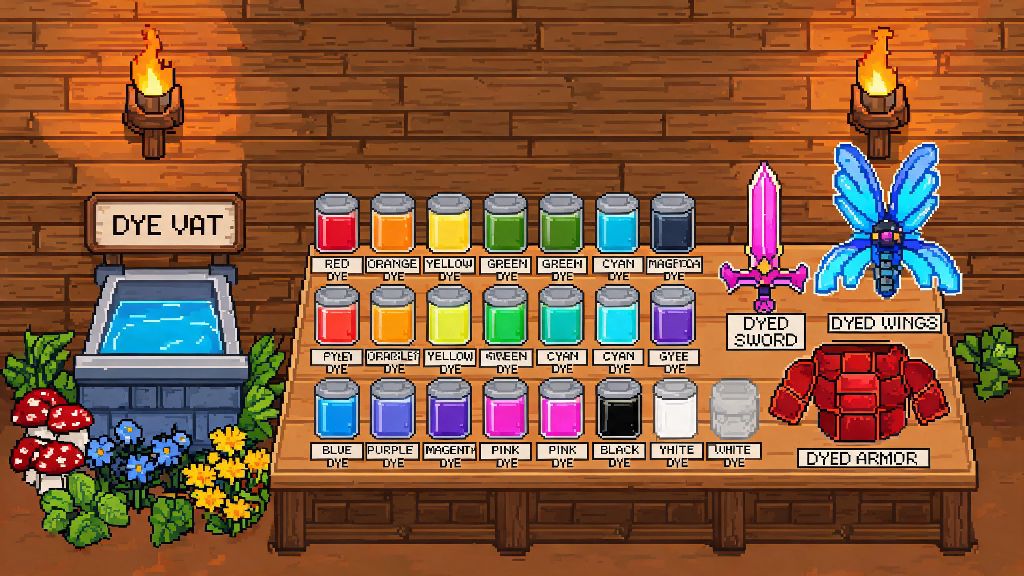
If you’ve ever stared at your plain iron armor or boring wooden house exterior and wished you could add a pop of personal flair, you’re not alone. Dyes are one of the most underrated quality-of-life features in Terraria, letting you tweak the color of almost any equippable item or build block to match your vibe. Whether you want to make your summoner armor match your minion palette or turn your entire base pastel pink, the process is way simpler than most new players assume. In this post, we’ll walk you through exactly how to make a dye in Terraria, plus pro tips to unlock rare and unique colors you won’t find by default.
What You Need Before You Learn How to Make a Dye in Terraria
First, you don’t need late-game gear to start crafting dyes, which is part of why they’re such a fun early-game activity. The only core crafting station you need is a Dye Vat, which you can buy from the Dye Trader NPC for 5 gold coins once you meet his spawn requirements. You don’t have to rush to unlock him immediately, but it’s worth keeping an eye out for his spawn conditions as you explore.
If you haven’t unlocked the Dye Trader yet, don’t panic. You can collect dye ingredients long before he moves in, so you’ll have a stockpile ready to craft as soon as he spawns. Most common dye ingredients are foragable items you can find on the surface within your first few hours of play, so there’s no need to go out of your way to farm rare drops early on. I remember my first playthrough, I spent 3 hours running around picking every flower I could find before I even knew the Dye Trader existed, and I had enough dye ingredients to make 20 different colors the second he moved into my base.
Crafting Common Basic Dyes Step by Step
Once you have your Dye Vat placed down, making basic dyes is as straightforward as any other crafting recipe in the game. First, open the Dye Vat interface, and you’ll see all available dye recipes pop up based on the items you have in your inventory. For the most common dyes, you only need one single ingredient per dye, no extra materials required. For example, a Yellow Marigold you pick from the grass will make one Yellow Dye, a Red Hibiscus makes Red Dye, and Blue Berries you find on the surface jungle make Blue Dye.
You can make up to 99 dyes at a time if you have enough ingredients, which is handy if you want to dye an entire base’s worth of blocks. If you’re not sure what ingredient makes what dye, you can hover over any foragable item in your inventory to see its dye output in the item description. The game will tell you exactly what color you’ll get before you even get to the Dye Vat, so you don’t have to waste ingredients guessing.
One pro tip here: Always pick up every flower and mushroom you pass during early exploration. Even if you don’t think you want that specific color right now, you’ll be glad you have it later when you’re trying to match a specific vanity set or build theme. You can even stack multiple dyes on the same item to create custom gradient effects, though that takes a little extra experimentation to get right.
Unlocking Rare and Special Dye Variants
Basic dyes are fun, but if you want to stand out from other players, you’ll want to track down ingredients for rare, animated, and gradient dyes. These require a little more work to unlock, but the payoff is worth it for anyone who cares about their in-game aesthetic. For example, the Flame Dye requires one Fireblossom, one Obsidian, and one Lava Bucket, which you can get once you have access to the underworld. It makes your armor or items glow with a flickering orange flame effect that’s perfect for melee or pyromancer builds.
If you want something even more unique, the Rainbow Dye requires you to collect one of each of the six basic primary and secondary dyes, plus a Pixie Dust drop from Hardmode pixies. It cycles through every color in the rainbow as you move, making it a popular choice for endgame vanity sets. There are also negative dyes, like the Black Dye made from Black Ink dropped by squids, and the White Dye made from Bone Meal, that are perfect for creating neutral or dark themed builds. I once used 3 stacks of Black Dye and Shadow Dye to make a gothic castle base in hardmode, and it still gets compliments from friends who join my server.
Keep in mind that some special dyes only spawn during specific in-game events, too. For example, the Ectoplasm Dye requires Ectoplasm dropped by Dungeon Spirits in Hardmode, and the Pumpkin Dye only uses Pumpkins that grow during the Halloween seasonal event. You don’t have to wait for events to get these dyes, though – you can always trade for rare ingredients with other players on multiplayer servers if you’re in a hurry.
Smart Tips to Use Dyes Efficiently in Your Playthrough
Now that you know how to craft dyes, there are a few easy tricks to make the most of them without wasting hard-earned ingredients. First, you don’t need to dye every piece of your armor individually if you want a matching set. Dyeing the chest piece first will automatically apply the same color to all other armor pieces in the same set, as long as you don’t override them with a different dye. That cuts down on the number of dyes you need to make by 75% for most sets, which is a huge timesaver.
Second, dyes are completely reusable if you decide you want to change your color scheme later. All you have to do is remove the dye from the item slot in your inventory, and it will go right back into your storage, no damage or loss required. That means you can experiment as much as you want without worrying about wasting rare ingredients. One common mistake new players make is wasting rare dyes on low-tier armor they’re going to replace in a few hours. If you only have one Flame Dye, save it for your endgame armor set or a permanent build piece, instead of using it on a copper chestplate you’re going to toss as soon as you find iron.
Also, if you’re playing on a multiplayer server, dyes are a great low-stakes trading item. Most players have extra stacks of common flowers they don’t need, so you can trade excess dyes for other crafting materials you might be missing, like iron bars or healing potions. If you run a build-focused server, rare dyes can even be traded for rare building blocks or custom vanity items you won’t find in single player.
At the end of the day, dyes are one of the easiest ways to make your Terraria playthrough feel personal and unique, even if you’re still working your way through pre-hardmode bosses. You don’t need fancy gear or endgame access to start experimenting, and the small amount of time you spend collecting flowers and unlocking the Dye Trader pays off massively when you get to design your perfect armor or base. Next time you’re exploring the surface, take a minute to grab that random flower you almost walked past – you’ll be shocked at how much fun you can have once you know how to make a dye in Terraria.