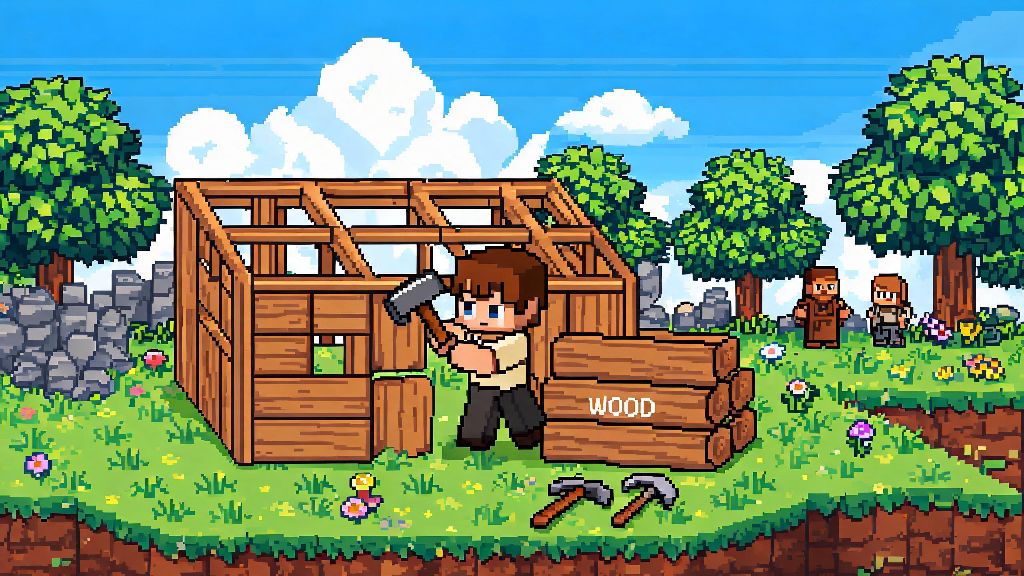
If you’ve booted up Terraria for the first time in 2026 or are coming back after a long break, the first critical task you’ll tackle once you spawn is setting up a safe, functional base. Figuring out how to build a house in Terraria doesn’t have to be confusing, even if you’ve seen viral complex base builds online that look impossible to replicate. This guide breaks down every step you need, from gathering basic materials to meeting NPC housing requirements, so you can set up your first home in under 30 minutes of spawn time. We’ve updated all our tips to match 2026’s latest Terraria 1.4.5 patch, including quality of life changes that make building far faster than older versions of the game.
Gather Essential 2026 Updated Materials for Your First Terraria House
You don’t need to grind for rare resources to build a valid first house, even if you’re playing on master mode. Most players start with wood because it’s easy to chop down within the first few minutes of spawning, but you can use cactus, stone, or ice if you spawn in a desert, underground, or snow biome respectively. You don’t need rare materials for your first house as long as you stick to solid, non-gravity affected blocks. We recommend building a 6x10 house for your first build, as it leaves enough space for storage, extra furniture, and future upgrades.
To build that basic 6x10 valid house, you’ll need the following materials:
The minimum material count for a basic 6x10 house is 60 blocks, but it’s smart to gather 20 or 30 extra to fix any mistakes you make during placement. Gravity-affected blocks like sand will not count as valid walls or flooring for housing, so avoid those unless you’re using them for decorative accents only. If you spawn near the corruption or crimson, make sure your build site is at least 25 blocks away from any corrupted blocks, because those will make the house unlivable for NPCs. You don’t need to clear every tree or rock around the build site, but leave a 2-block gap around the perimeter to make it easier to place outer walls.
Core Rules for How to Build a House in Terraria That Works for NPCs
A random box of blocks won’t count as a valid house for NPCs, even if it looks complete to you. The game has specific, non-negotiable rules for housing validity, and we’ve updated these to match 2026’s latest patch changes. First, size matters: the interior of the house needs to be at least 3 blocks wide and 6 blocks tall, not counting the outer walls. Most players go for 6x10 to leave extra space for storage chests and extra furniture, but the minimum works if you’re in a pinch right before the first blood moon.
Next, you need a fully enclosed space with no gaps in the floor, ceiling, or side walls, except for the single door you place for access. You also have to line the entire interior with player-placed background walls – natural dirt or stone walls that spawn in the world don’t count, you have to craft and place your own, like wood walls or stone walls. In 2026’s latest update, you can use the new quick wall place feature by holding down the left mouse button and dragging, which cuts down wall placement time by 70% compared to older versions.
Once you place the required furniture and light source, you can check if your house is valid using the housing menu in your inventory. The check validity button will tell you exactly what you’re missing if the house isn’t working, so you don’t have to guess. I once spent 20 minutes confused why my guide wouldn’t move in, just to realize I forgot to replace a single dirt background wall in the corner of the house, so don’t skip that step.
Add Safety Features to Protect Your House From Early Game Threats
A valid house is useless if it gets broken into by zombies or demons every night, so you’ll want to add a few low-effort safety features before you head out on your first mining run. 2026’s patch adjusted enemy pathing to make them smarter about targeting doors, so you can no longer just place a single wooden door and expect it to hold through a blood moon. The easiest way to stop zombies from breaking down your door on blood moons is to place a block in front of the door on the outside, or put the door 1 block above ground level. Zombies can’t jump high enough to reach the door if it’s elevated, so that’s a free fix that doesn’t cost any extra resources.
You should also place 3 or 4 torches around the outside of the house to stop slimes and other low-level enemies from spawning right outside your door. If you’re playing on master mode, you can craft a handful of wooden spikes to place around the perimeter of the house to take out enemies before they get close. You don’t need to build a full moat or elaborate defense for your first house, but a few small tweaks will save you from having to repair broken walls every other night.
It’s also a good idea to place a chest right inside the door to store extra building materials and loot you gather during the day, so you don’t have to run back and forth to your spawn point to drop items. You can add a second chest later for crafting materials once you start mining for ore and exploring deeper caves.
Easy Creative Upgrades to Customize Your House in 2026
Once you have a basic valid house set up, you don’t have to stick to a plain wooden box forever. 2026’s latest update added a ton of new building options for players who want to make their base feel more personal, without having to grind for rare materials. 2026’s latest update added over 120 new furniture and block types for building, including cherry wood blocks, stained glass windows, and custom wallpaper that lets you change the look of your interior walls without replacing the background walls entirely.
If you want to make a multi-story base, you can add stairs or platforms between floors, just make sure each separate NPC room meets the minimum size and furniture requirements. You can also add decorative touches like potted plants, paintings, and rugs to make the space feel more personal, and these don’t interfere with the housing validity at all. If you’re playing with friends, you can assign each person a separate room in a shared base, and add custom signs with each player’s name on the door to mark spaces.
If you build your house near a biome you like, like the forest or the ocean, you’ll get unique background scenery that makes your base feel even more special. You can also add a small outdoor garden or patio area once you unlock more building materials later in the game. The best part about building in Terraria is that you can tear down and rebuild sections of your house whenever you want, so don’t be afraid to experiment with different designs.
Building your first base doesn’t have to be a frustrating process, even if you’re brand new to the game in 2026. Once you learn how to build a house in Terraria that meets basic validity rules, you can tweak and expand it as you progress through the game and unlock more materials and furniture. Take it one step at a time, start with a small basic house first before you try to build a giant floating castle, and don’t be afraid to experiment with different designs and block types. Before you know it, you’ll have a fully functional base that’s home to all your favorite NPCs, and a safe spot to return to after every long mining or boss fighting run.