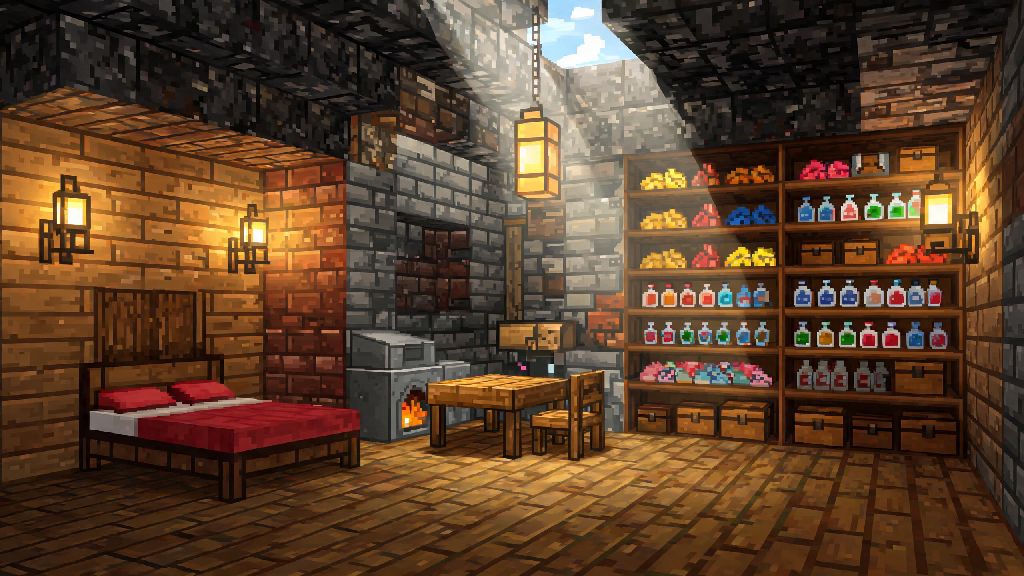
If you’ve just spawned into Terraria for the first time and spent your first night cowering in a dirt hole while zombies and demon eyes scratch at the walls, you’ve probably wondered how do i build a house in Terraria that actually feels like a safe base. Building a functional home isn’t just for show—it’s the only way to get NPCs to move in, store your loot safely, and have a reliable spawn point if you die exploring the caves below. I’ve built everything from tiny 3-room starter homes to sprawling floating castles across dozens of playthroughs, so I’m breaking down exactly what you need to know to build your first house without wasting hours on mistakes.
How Do I Build a House in Terraria: Core Requirements First
Before you pick out flooring or decor, you have to hit the base requirements the game uses to count a structure as a valid house. Skip any of these, and your NPCs will refuse to move in, no matter how pretty your build is. If you’re still figuring out how do i build a house in Terraria that passes the game’s validity check, start with these non-negotiable rules:
If you’re not sure if your house is valid, open your inventory, click the house icon next to the NPC portraits, and use the housing query tool to click your build. The game will tell you exactly what’s missing, so you don’t have to guess. I still use this tool regularly when I’m building multi-room bases for 10+ NPCs, just to make sure I didn’t miss a gap in the walls.
Best Budget Building Materials for Your First House
You don’t need to mine 500 stone blocks or hunt for rare wood to build your first functional house. Most new players can pull together all the materials they need in the first 10 minutes of a playthrough, right around the spawn area. Dirt is super abundant, but it’s not the best choice if you plan to expand later—it looks messy, and grass can grow on it if you leave it exposed to sunlight.
Wood is the best starter material for 90% of new players, since you can cut 30-40 trees right at spawn with your starting copper axe. It’s cheap, easy to work with, and you can paint it later if you want to change the look without rebuilding. I usually keep a stack of 100 wood on me when I start a new playthrough, so I can build a small house as soon as it hits midday, before the first night falls.
If you spawn in the snow or desert biome, you can use cactus or boreal wood instead, just avoid using ebonwood or shadewood from corrupted biomes—any house built with corrupted blocks will be marked as invalid for NPCs. You can swap out your wooden frame for stone or brick later once you have a pickaxe strong enough to mine stone easily, if you want a sturdier looking base.
Common Mistakes That Make Your House Unusable
I’ve made every possible building mistake in my 8 years of playing Terraria, so I can tell you exactly what to avoid to not waste time fixing your build at the last minute. The most common mistake new players make is leaving gaps in background walls. I can’t tell you how many times I came back from a mining run to find a zombie spawned in my bedroom because I missed a single dirt wall tile behind my chests.
Always fill in background walls from top to bottom before you add furniture, even if the gap looks too small for anything to spawn through. Another common mistake is building too close to a corruption, crimson, or hallow biome. The game considers any area within 25 tiles of corrupted blocks uninhabitable, so if your house is right next to a corrupted chasm, NPCs won’t move in. If you notice the background music changes when you stand in your house, you’re too close to a biome that makes housing invalid.
Using doors that open outward is another easy mistake to fix. Early game zombies can bash through outward-opening doors on blood moons, so placing your door so it opens into your house will save you a lot of stress. For extra safety, you can place a 1-tall block in front of your door on the outside—zombies can’t jump over it, and you can still walk over it easily when you come and go.
Upgrading Your Starter House for Mid and Late Game
Your first 30-tile wooden house will work great for the first few hours of play, but once you start beating bosses and unlocking more NPCs, you’ll want to expand and upgrade it to fit your needs. First upgrade: Replace wooden doors with iron doors or even dungeon doors once you can get them—they can’t be broken by any enemies, even during blood moons or solar eclipses. You can also add a small moat around your base with lava if you want extra protection against hordes.
Add chests for every category of item early on, so you don’t end up digging through 10 chests looking for a specific potion when you’re prepping for a boss fight. I usually have separate chests for building materials, weapons, potions, and crafting supplies, and I label each one with a sign so I don’t get confused. You can also add item frames on the front of each chest to show what’s inside, which makes sorting even faster.
Once you beat the Wall of Flesh, you can add teleporters to connect your base to your mining outposts, boss arenas, and other biomes. You can also add functional decor like a bed to set your spawn point, a cooking pot to make food that gives you buffs, and a tinkerer’s workshop to reforge your weapons and tools. If you want to make your house look nicer, you can swap out wooden blocks for stone, brick, or even glowing mushroom blocks to match your personal style—just make sure you don’t remove any of the core housing requirements when you remodel.
Building a house in Terraria doesn’t have to be complicated, even if you’re completely new to the game. Once you memorize the core requirements and avoid the common mistakes I listed, you’ll be able to build everything from a tiny starter hut to a sprawling mega-base as you progress through the game. Whether you’re playing solo or with friends, taking 10 minutes to build a solid, safe base at the start of your playthrough will save you hours of frustration later on. If you’ve been stuck asking how do i build a house in Terraria, grab your axe, cut down a few trees, and start building—you’ve got everything you need to make a space that’s both functional and uniquely yours.